Sorrow was in my mother’s bones long before my father asked her for a divorce. She often recounted the story of her grandmother, Ida Mae Brown, who left Baton Rouge, Louisiana, in 1909 after Ida Mae’s brother killed her husband. Homeless, she fled to St. Louis with her five children, the eldest being my mother’s father. Without resources to care for them, Ida Mae gave her children over to the orphanage. Imagining her father’s pain, Mom would end her story with a quiet refrain: “At least I have you boys.”
Piecing together what was torn apart is at the heart of Rituals of Belonging. I returned to Louisiana to explore this legacy from 1991 to 2025—my own search through crowds, chasing connection amid the blur of Mardi Gras, where everyone looks like my cousin. Early on, I captured grids on film from St. Charles to St. Ann streets; later, digital allowed me to compose more fluidly as I wandered the Bywater and Marigny.
A sequence of photos often starts with: “Aw y’all together?” Then there’s a wink, a nod, and we begin to play while snapping fragments of images from head to toe. Each moment framed is a small offering to our family left behind.
Back home in California, I weave these shards of memory into a kaleidoscopic experience, trying to understand what I’ve not seen before. These are the threads of light I use to stitch together our rituals of belonging.
Rituals of Belonging

A sequence from 1992, Parade Rest

A Kodak Moment, 1995
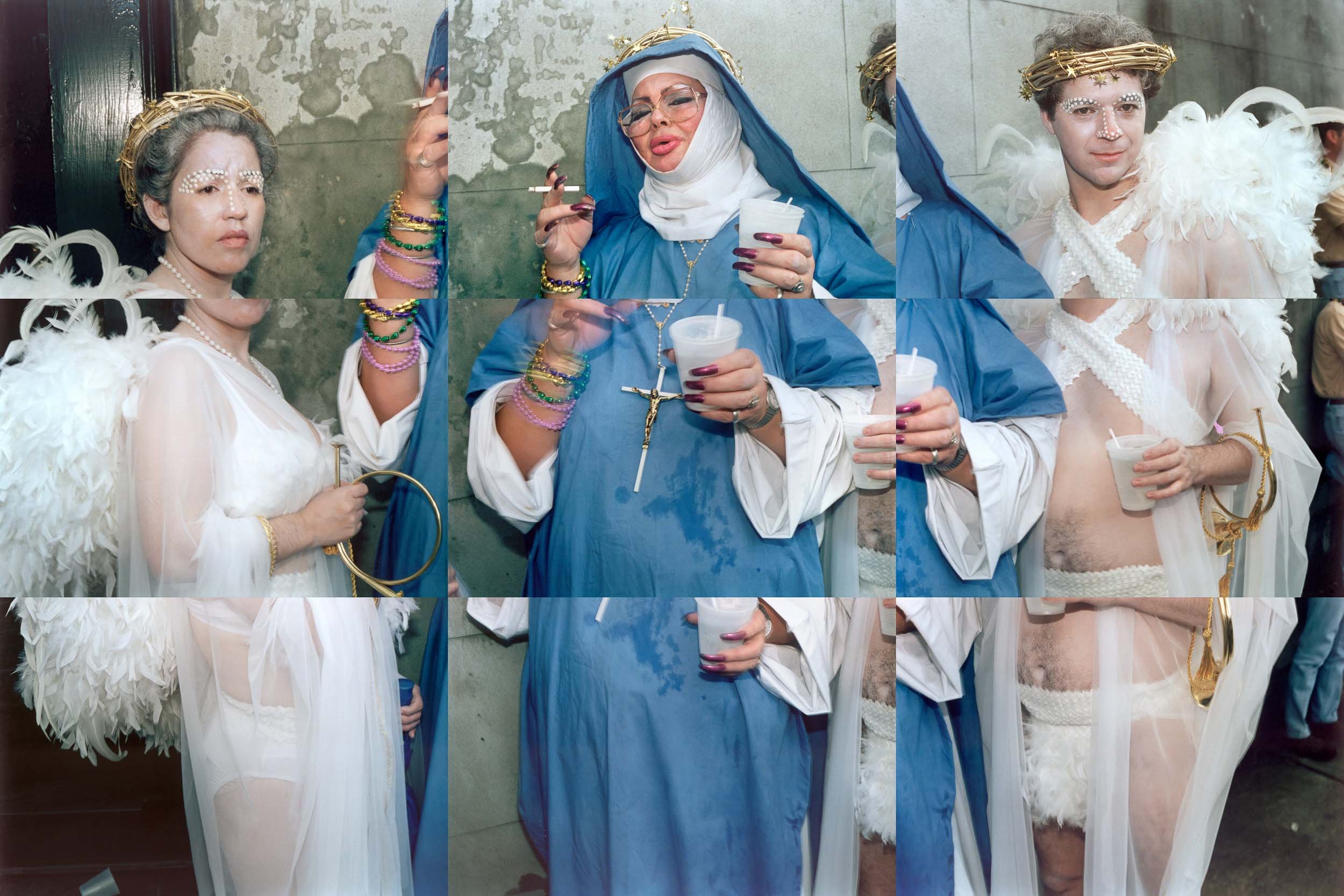
Blue Nun, 1995

Pinks, 1995

You Spiritually Stink, 2001

Stewardess, 2019

Twister Sisters, 1995

Hummingbird Hotel & Grill, 2001

Four Graces, 1995

Boy Bikes, 1995

Metal Man, 1995

Super Dogs, 2001

Girl in the Red Dress, 2001

Flambeaux, 2018

Belles of St Anne, 2019

Lulu Parade's End, 2020

Street Wrestling, 2020

Repent or Parish, 2019

Side Stoop, 2020
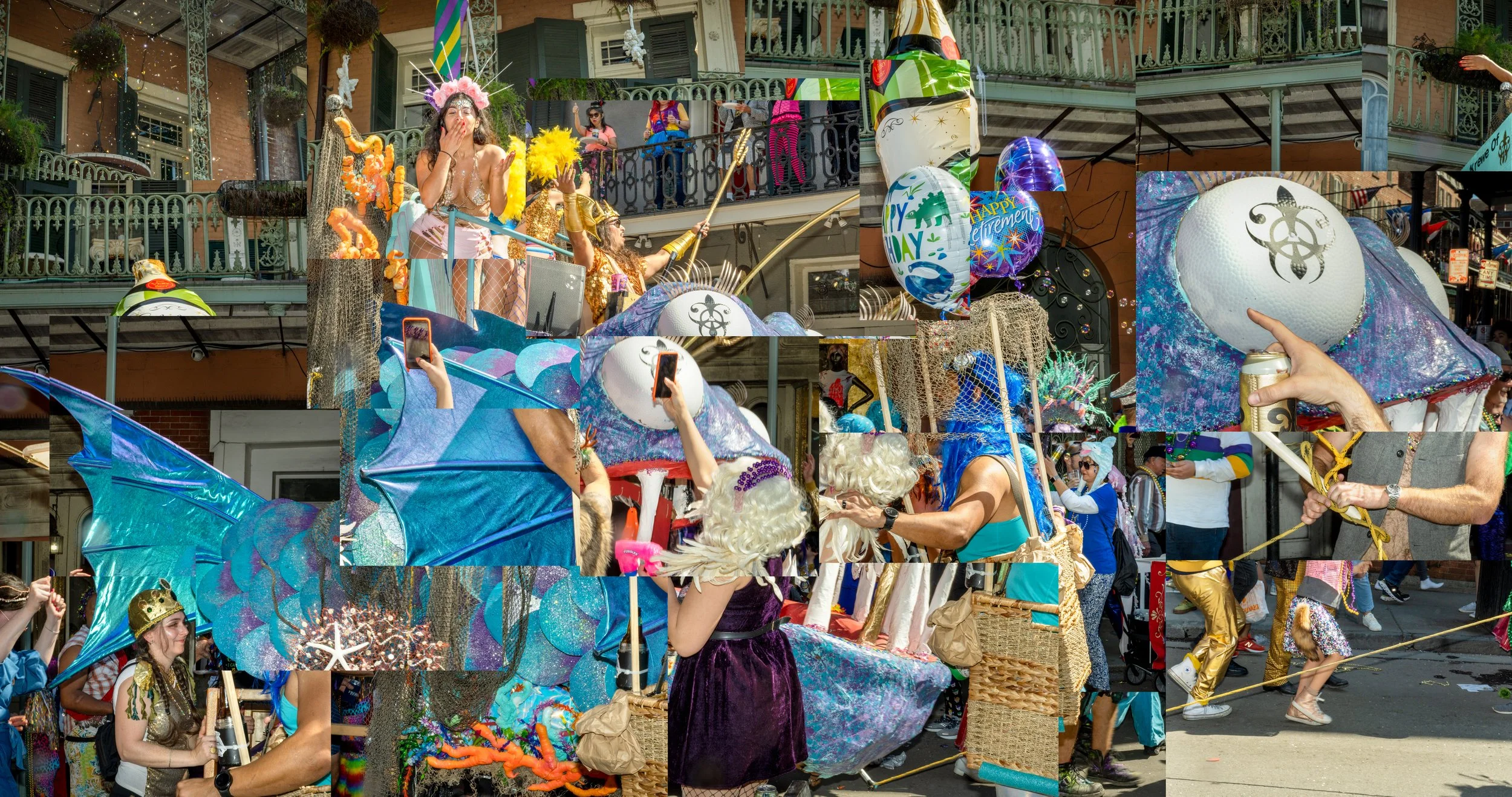
Poseidon's kiss, 2024
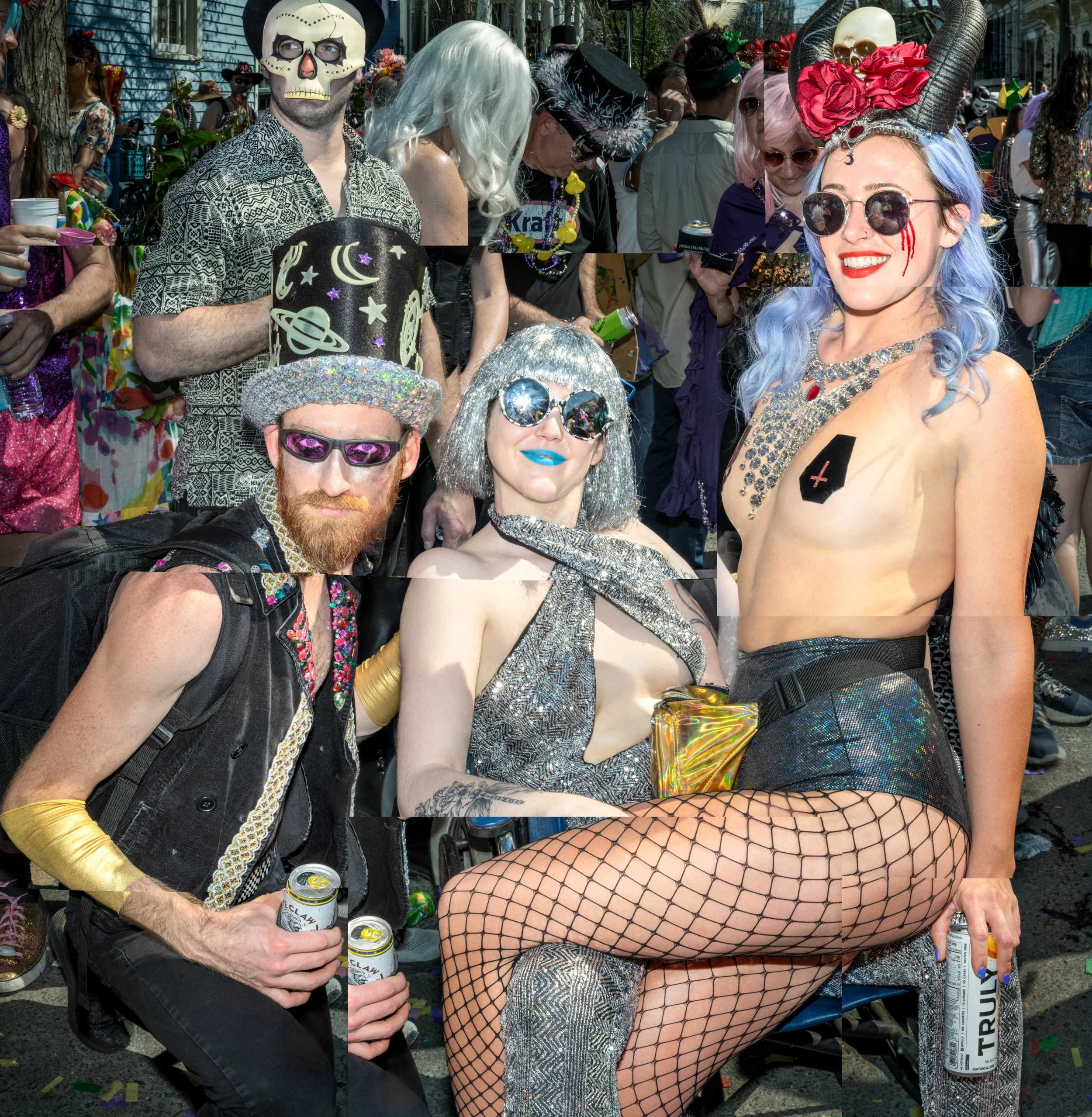
Mystery Trio Plus One, 2024
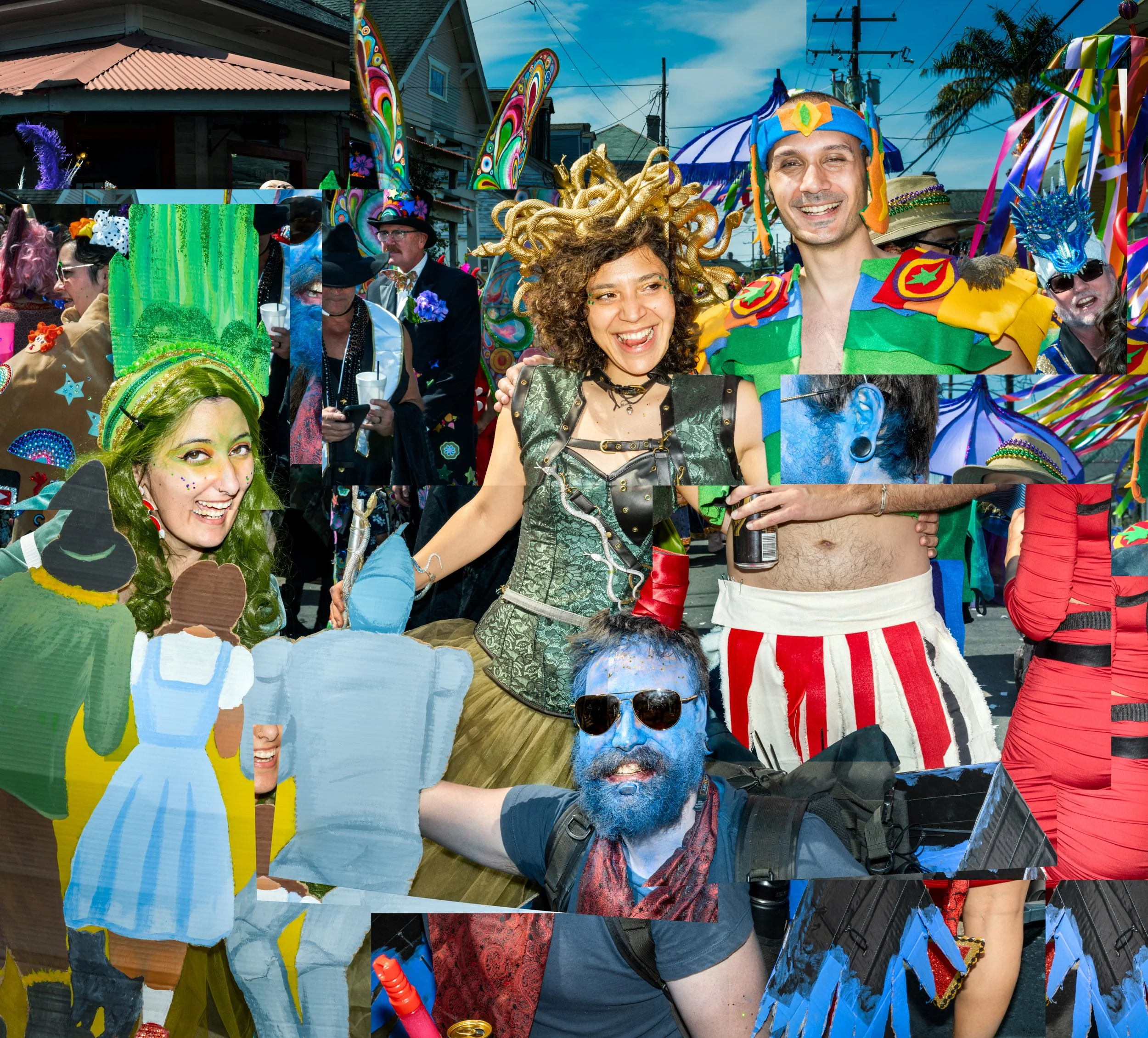
Waiting for Oz, 2024
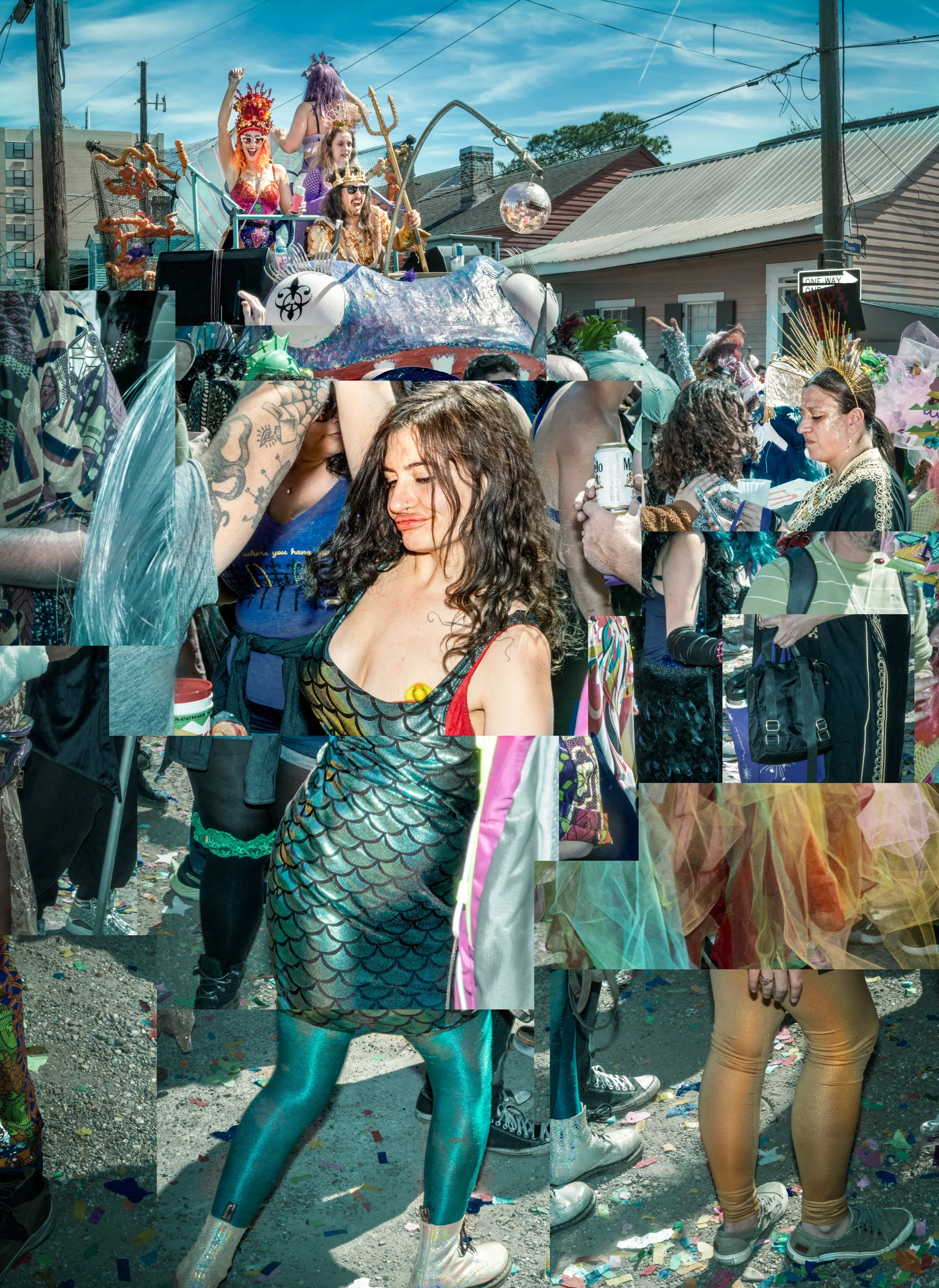
Dancing with Poseidon, 2024
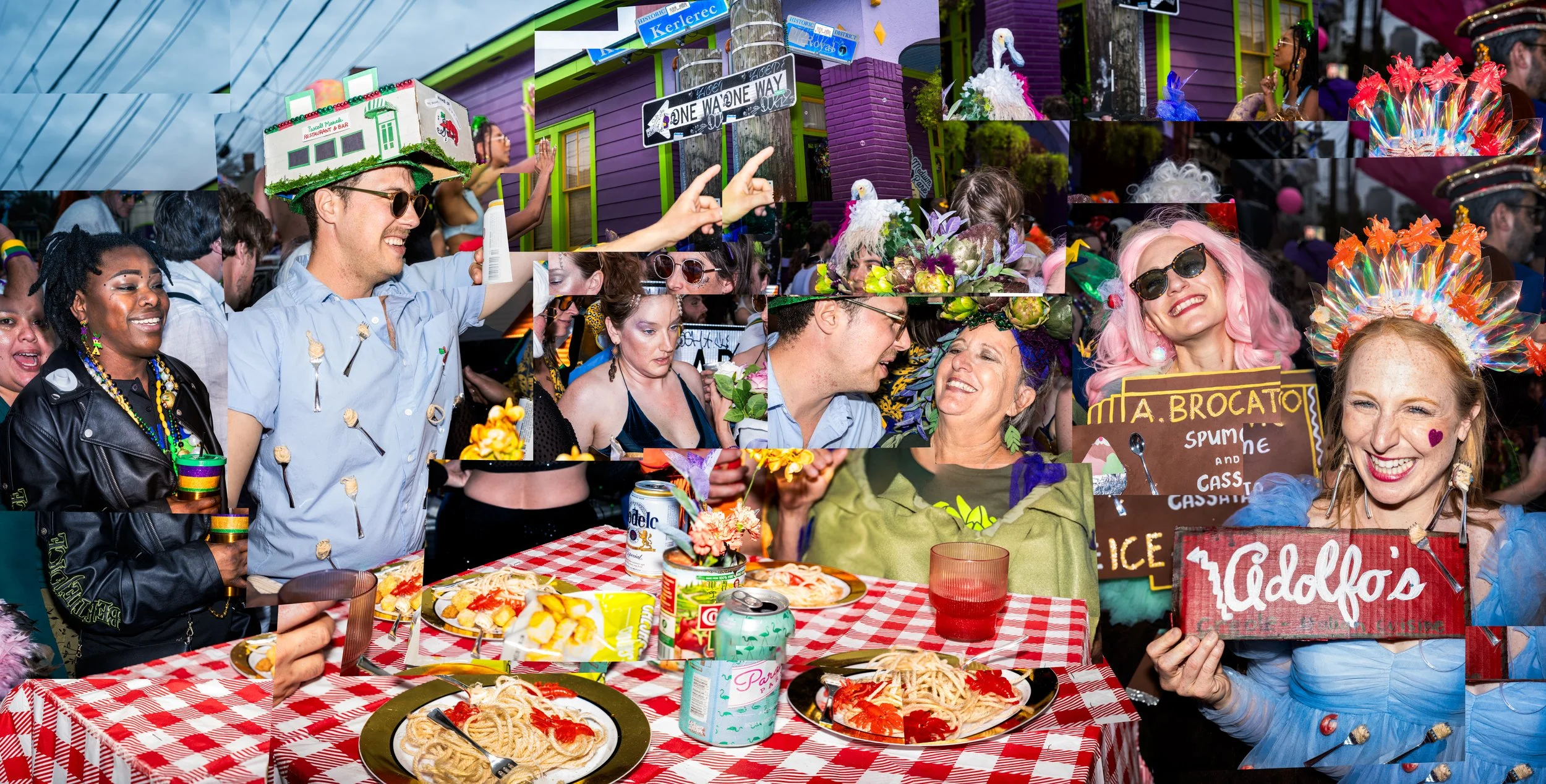
Adolfo's Table, 2025
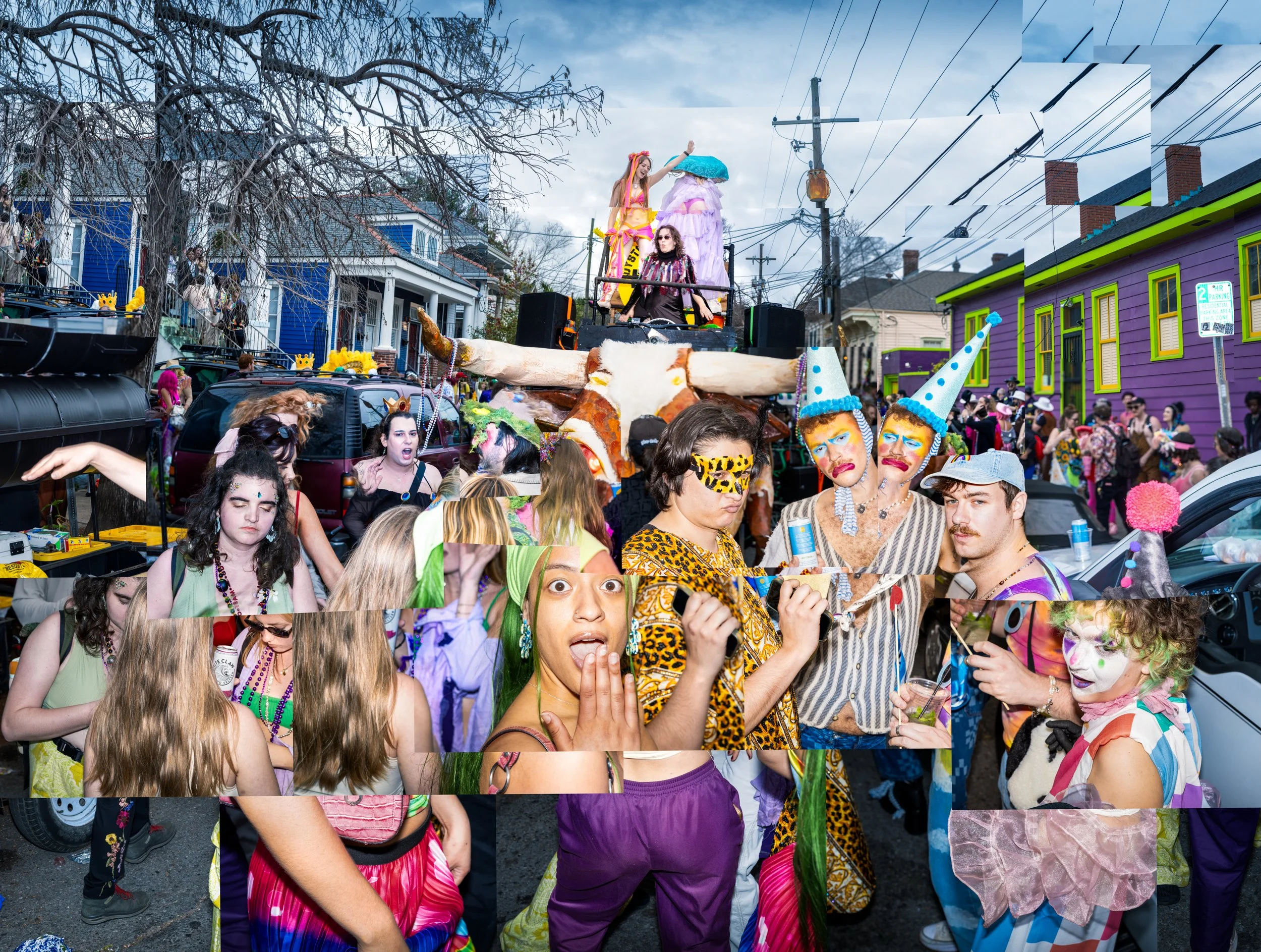
Before the Beast, 2025